Our guides focus on home fit, everyday use, upkeep, and value. Retailer links in this story are ordinary links; no commission is earned from them. Read our affiliate disclosure.
In this story
Start with the setting you need overnight
A purifier can be quiet at its lowest speed and still be the wrong machine for a bedroom. The missing question is how much filtered air it delivers at that setting. Published room coverage usually describes a high-output condition, while the appealing minimum noise number describes a low-output condition. Putting those two claims together creates an expectation the specification may not support.
Measure the bedroom, including ceiling height, and choose a capacity target before judging sound. If you need maximum speed to cover the room on paper, there may be little flexibility for nighttime operation. A larger-capacity shortlist can provide options, but only speed-specific airflow data can confirm how much performance remains on low.
Read decibel ranges without inventing a winner
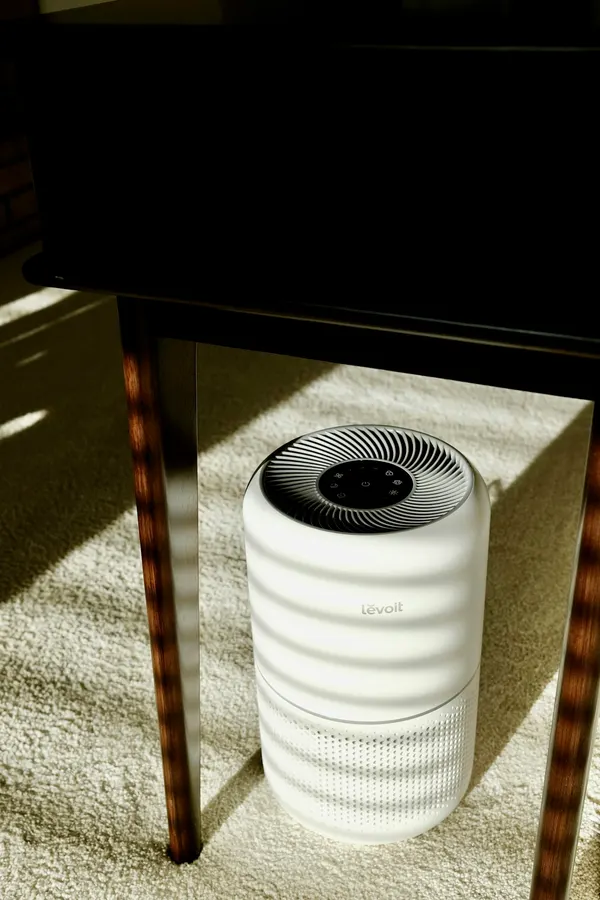
The US product pages currently list 23–54 dB for the Levoit Vital 200S-P, 23–50 dB for the Blueair Blue Pure 311i Max, and 24–53 dB(A) for the Coway AP-1512HH. These are manufacturer ranges, not our measurements. Differences in test distance, room, weighting, and speed mean that lining up the minimums does not establish the quietest purifier at equal cleaning capacity.
Sound character also matters. A steady airflow sound may be acceptable while a changing motor pitch or intermittent click is distracting. Product specifications rarely describe that experience. Online recordings can reveal an obvious rattle, but recording microphones, room acoustics, and playback volume prevent them from being a reliable sound-level comparison.
| Bedroom priority | Feature to inspect | Useful real-room check |
|---|---|---|
| Steady sound | Manual speeds and automatic behavior | Listen from the pillow through a normal evening |
| Dark room | Display, status light, and night-mode settings | Check after controls have been idle |
| Adequate filtration | Capacity at the intended speed | Avoid pairing maximum CADR with minimum noise |
| Flexible placement | Manual clearances and intake direction | Try another permitted location before returning |
Separate Sleep mode from predictable operation
Check exactly what Sleep or Night mode changes: fan speed, display brightness, indicator lights, button sounds, or some combination. A feature with the right name may still leave a status light visible from your pillow. Look for instructions covering the display and any restart behavior after a power interruption.
Automatic operation brings another tradeoff. It may raise the fan after a detected particle event, which is useful for filtration but noticeable in a quiet room. If steady sound matters to you, consider whether a manual setting meets your room target. Do not assume that choosing the quietest available mode preserves the machine's advertised maximum coverage.
Plan a bedroom return-window check
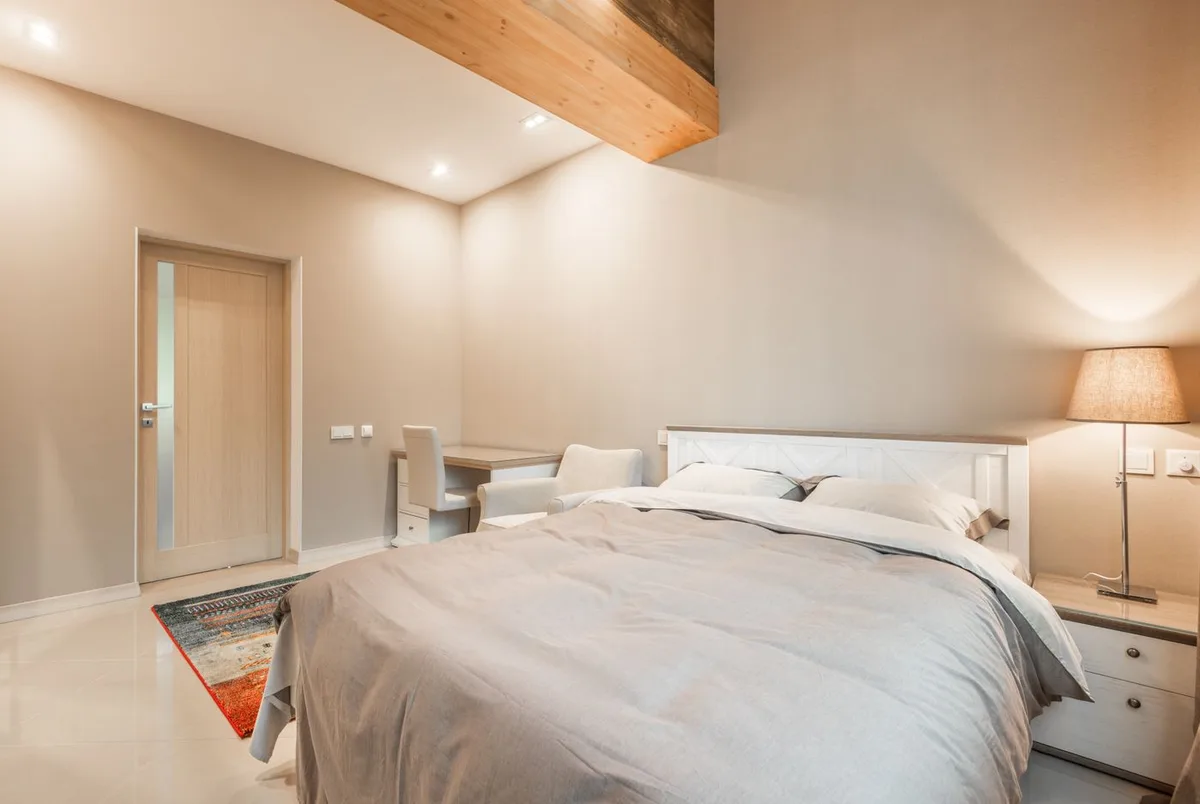
Before purchase, check the seller's opened-product return conditions. During the return window, evaluate the purifier from the bed with the lights out, the bedroom door in its normal position, and other equipment running as usual. Try the intended nightly setting for several evenings, rather than judging it for ten seconds in a busy daytime room.
Make a short note of fan changes, visible lights, button sounds, and any vibration reaching the furniture or floor. If the sound is bothersome, follow the manual's placement instructions and try another permitted position. Do not cover an intake, place the unit inside a cabinet, or pack soft material around it to muffle noise.
Balance nighttime comfort with actual use
Running higher before bedtime can be a convenient routine, but it is not a substitute for suitable ongoing filtration when particles continue to enter the room. There is no universal number of pre-cleaning minutes that guarantees a result. A timer that switches the purifier off also stops its particle-cleaning contribution, so choose schedules around the job you want it to do.
Inspect the pre-filter and follow maintenance directions if an established unit starts sounding different. Packaging left around a new filter, a poorly seated cover, or accumulated debris can require attention; use the manual's troubleshooting process. If a motor develops a persistent abnormal sound, contact support rather than assuming all purifiers eventually become noisy.
Our practical choice is the machine that supplies useful airflow at a setting you will keep using. This guide has no measured noise ranking and makes no promise about sleep improvement; the return-window check resolves the personal comfort question that specifications leave open.
The considered choice
Choose enough usable airflow first, then check steady sound, lights, and automatic fan changes from the bed during the return window.
Put the guide to work
Take your measurements and must-have list with you. These retailers are useful places to compare options; check the exact listing, current price, delivery terms, and return policy before buying.
Levoit
Air purifiers and humidifiers for room-by-room home comfort.
Explore Levoit ↗Opens the retailer’s websiteBlueair
Air purification products with room-size and filter information.
Explore Blueair ↗Opens the retailer’s websiteCoway
Air purifiers with published CADR, room, and filter specifications.
Explore Coway ↗Opens the retailer’s websiteA few common questions
Is a one-decibel difference a reason to buy?
Not when the brands' measurement conditions and airflow differ. Treat small published differences as insufficient evidence for a practical ranking.
Can I put the purifier farther from the bed?
Yes, if the new location meets the manual's clearances and still serves the same room. Keep airflow unobstructed and avoid turning placement into a tripping hazard.
Should I switch it off once I fall asleep?
That depends on your filtration goal, but switching it off ends its contribution. Choose a comfortable sustained setting when you need ongoing particle removal.
Sources & further reading
- Levoit: Vital 200S-P published specifications — checked 2026-10-03
- Blueair: Blue Pure 311i Max technical specifications — checked 2026-10-03
- Coway: Airmega Mighty AP-1512HH specifications — checked 2026-10-03
- EPA: Guide to Air Cleaners in the Home — checked 2026-10-03
This is a research-based buying guide. We do not claim hands-on testing of the products linked here. Product details and availability can change. How we work · Suggest a correction