Our guides focus on home fit, everyday use, upkeep, and value. Retailer links in this story are ordinary links; no commission is earned from them. Read our affiliate disclosure.
In this story
Measure humidity before choosing a tank
A cold North American winter does not automatically mean every room needs a humidifier. Measure relative humidity with a separate hygrometer in the room you want to use. Watch morning and evening readings for several days, alongside window condensation and how often the heating runs. The goal is controlled moisture, not the largest visible plume.
EPA recommends avoiding indoor humidity above 50 percent when using a humidifier. A cold window may collect condensation even below that level, so treat condensation as a reason to reduce output and reassess. A humidistat is helpful, but placing its sensor near the mist stream can make the displayed number less representative of the room.
Pick the moisture method around your maintenance habits
An ultrasonic unit makes a cool mist with vibration. Its attraction is quiet operation and a compact design, but water quality matters: minerals in the tank can become white dust on nearby surfaces. EPA advises low-mineral water, with distilled water a practical option. Include water purchasing and carrying in the ownership routine before deciding that a large tank saves work.
An evaporative model passes air through a wet wick. The fan adds audible airflow and the wick becomes a recurring supply. A warm-mist or steam design adds heat and requires care around hot water. For a child's room or a busy bedside surface, think carefully about placement, access, and the possibility of spills rather than treating warm mist as a premium upgrade.
| Humidifier type | Ownership consideration | Good shortlist reason |
|---|---|---|
| Ultrasonic cool mist | Water minerals and frequent tank care | Quiet mist delivery with an easy-clean tank |
| Evaporative wick | Fan sound and replacement wicks | You prefer wick-based evaporation |
| Warm mist or steam | Hot water, scale, placement | You specifically want a warmed-mist option |
| Any smart model | Sensor placement and cleaning remain important | Schedules and display controls solve a real need |
Two Levoit examples show the real tradeoffs
The Levoit Classic 300S is a 6-liter ultrasonic cool-mist model with a top-fill tank and smart controls. The OasisMist 450S has a 4.5-liter tank and offers warm and cool mist. On paper, the Classic's larger tank suits someone who values more water capacity, while the OasisMist suits someone who specifically wants a warm-mist option.
Neither tank size proves better humidity control. Published maximum runtimes depend on settings, so they are not promises for a dry room at high output. Our comparison uses documented features, not measured evaporation rates. Before choosing either, inspect the manual's cleaning diagrams and imagine reaching the corners of the tank and base with the tools you actually own.
Cleaning access should decide the shortlist
EPA recommends emptying, drying, and refilling portable humidifiers daily, and cleaning them every third day. Follow the model's instructions for approved cleaning agents and rinse thoroughly. A wide opening, removable tank, manageable filled weight, and visible water-contact surfaces matter more to this routine than an attractive app dashboard.
Top-fill does not mean leave-in-place forever. The tank and base still need attention. Check whether a handle remains usable when wet, whether the tank sits steadily in the sink, and whether the lid has small channels that are awkward to dry. A smaller, easier-to-clean unit can be a better fit than a high-capacity one you postpone maintaining.
Set it up as a controlled room appliance
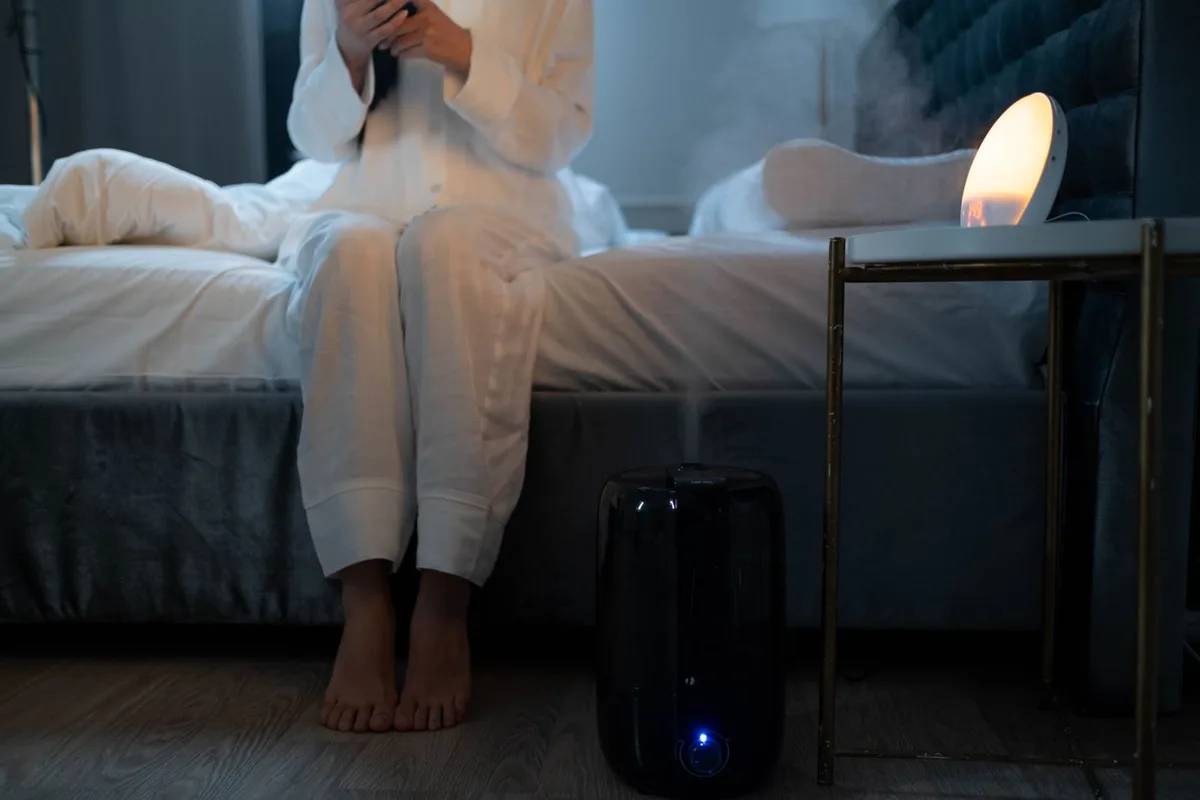
Choose a level, water-tolerant surface and follow the manufacturer's distance and placement directions. Keep the mist from continuously wetting bedding, curtains, furniture, or the wall. If nearby surfaces become damp, reduce output or relocate the unit. Do not treat a carpeted bedside corner as the default home for a water appliance.
Smart scheduling can prevent needless daytime operation, while a display-off setting is useful for a dark bedroom. Neither replaces checking the hygrometer or the tank. Use only additives permitted for the exact model and compartment; an aroma pad is not permission to pour oil into the water reservoir. At season's end, clean and completely dry the device before storage.
The considered choice
Buy for measurable humidity control and easy cleaning. Tank capacity and smart features matter only after the daily water routine fits your home.
Put the guide to work
Take your measurements and must-have list with you. These retailers are useful places to compare options; check the exact listing, current price, delivery terms, and return policy before buying.
Levoit
Air purifiers and humidifiers for room-by-room home comfort.
Explore Levoit ↗Opens the retailer’s websiteA few common questions
Can I use bottled spring water?
Spring water may contain minerals. EPA identifies distilled water as a lower-mineral option for ultrasonic or impeller humidifiers; follow your model's water instructions.
Does warm mist humidify better?
The warm setting alone does not establish better room control. Compare output, placement, tank care, and the model's specifications rather than assuming heat is an upgrade.
Does a 60-hour runtime mean I can leave the water for days?
No. Maximum runtime is a performance claim under specified settings, not a cleaning schedule. Daily tank care still applies.
Sources & further reading
- EPA: Use and Care of Home Humidifiers — checked 2026-10-03
- Levoit: Classic 300S ultrasonic humidifier — checked 2026-10-03
- Levoit: OasisMist 450S smart humidifier — checked 2026-10-03
This is a research-based buying guide. We do not claim hands-on testing of the products linked here. Product details and availability can change. How we work · Suggest a correction